
Trailer And Tongue Weight
Always load a trailer with 60% to 65% of the weight in the front of the trailer. This places 10% to 15% of the Gross Trailer Weight (GTW) on the tow hitch of your vehicle. Loads balanced over the wheels or heavier in the rear can cause the trailer to sway severely side to side which will cause loss of control of the vehicle and trailer.
Failure to load trailers heavier in front is the cause of many trailer collisions.
Never exceed the maximum tongue weight stamped on your bumper or trailer hitch.
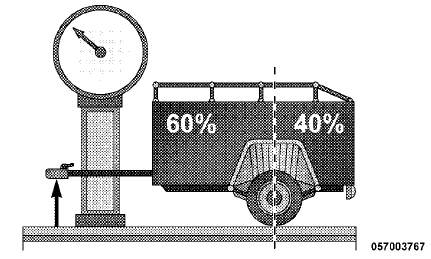
Consider the following items when computing the weight on the rear axle of the vehicle:
• The tongue weight of the trailer.
• The weight of any other type of cargo or equipment put in or on your vehicle.
• The weight of the driver and all passengers.
NOTE:
Remember that everything put into or on the
trailer adds to the load on your vehicle. Also, additional
factory-installed options or dealer-installed options must
be considered as part of the total load on your vehicle.
Refer to the “Tire and Loading Information” placard for
the maximum combined weight of occupants and cargo
for your vehicle.
See also:
Refrigerant Recovery And Recycling
R-134a air conditioning refrigerant is a hydrofluorocarbon
(HFC) that is endorsed by the Environmental
Protection Agency and is an ozone-saving product. However,
the manufacturer recommends that ...
Vehicles Equipped With Remote Start
On models that are equipped with remote start, the
driver’s heated seat can be programmed to come on
during a remote start. Refer to “Remote Starting System
—If Equipped” in “Things To ...
Controls
The headphone power indicator and controls are located
on the right ear cup.
NOTE:
The rear video system must be turned on before
sound can be heard from the headphones. To conserve
battery li ...