
Trailer And Tongue Weight
Always load a trailer with 60% to 65% of the weight in the front of the trailer. This places 10% to 15% of the Gross Trailer Weight (GTW) on the tow hitch of your vehicle. Loads balanced over the wheels or heavier in the rear can cause the trailer to sway severely side-to-side, which will cause loss of control of the vehicle and trailer.
Failure to load trailers heavier in front is the cause of many trailer collisions.
Never exceed the maximum trailer tongue weight stamped on your bumper or trailer hitch.
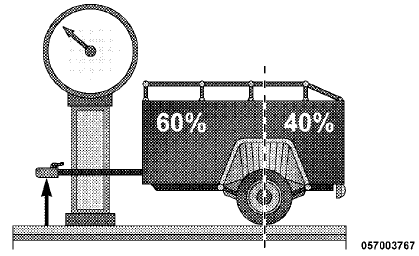
Consider the following items when computing the weight on the rear axle of the vehicle:
• The tongue weight of the trailer.
• The weight of any other type of cargo/luggage or equipment put in or on your vehicle.
• The weight of the driver and all passengers.
NOTE:
Remember that everything put into or on the
trailer adds to the load on your vehicle. Also, additional
factory-installed options, or authorized dealer-installed
options, must be considered as part of the total load on
your vehicle. Refer to the “Tire Safety Information/Tire
and Loading Information Placard” in “Starting and Operating”
for the maximum combined weight of occupants
and cargo for your vehicle.
See also:
Vehicle Info (Customer Information Features)
Press and release the UP or DOWN button until “Vehicle
Info” displays in the EVIC and press the SELECT button.
Press the UP and DOWN button to scroll through the
selections below:
• Coolan ...
Lights On Reminder
If the headlights or parking lights are on after the ignition
is turned OFF, a chime will sound to alert the driver
when the driver’s door is opened. ...
Hard-Keys
The hard-keys are located below the Uconnect Touch™
screen, in the center of the instrument panel.
Automatic Climate Controls — Hard-keys ...