
Lower Anchors and Tether for CHildren (LATCH)
Your vehicle’s rear seat is equipped with the child restraint anchorage system called LATCH. The LATCH system provides for the installation of the child restraint without using the vehicle’s seat belts, instead securing the child restraint using lower anchorages and upper tether straps from the child restraint to the vehicle structure.
LATCH-compatible child restraint systems are now available.
However, because the lower anchorages are to be introduced over a period of years, child restraint systems having attachments for those anchorages will continue to have features for installation using the vehicle’s seat belts. Child restraints having tether straps and hooks for connection to the top tether anchorages have been available for some time. For some older child restraints, many child restraint manufacturers offer add-on tether strap kits or retrofit kits. You are urged to take advantage of all the available attachments provided with your child restraint in any vehicle.
All three rear-seating positions have lower anchorages that are capable of accommodating LATCH-compatible child seats. You should never install LATCH-compatible child seats so that two seats share a common lower anchorage. If installing child seats in adjacent rearseating positions, or if your child restraints are not LATCH-compatible, install the restraints using the vehicle’s seat belts.
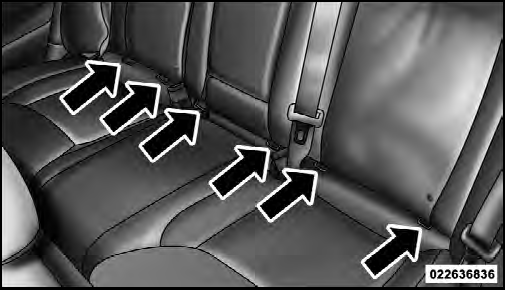
LATCH Anchorages
See also:
Garage Door Opener — If Equipped
HomeLink replaces up to three hand-held transmitters
that operate devices such as garage door openers, motorized
gates, lighting or home security systems. The
HomeLink unit is powered by your ve ...
Five-Speed Automatic Transmission – 5.7L Engine
The shift lever position display (located in the instrument
panel cluster) indicates the transmission gear range. You
must press the brake pedal to move the shift lever out of
the PARK position ...
Voice Command Tree
Refer to “Voice Tree” in this section. ...